The Velvet Rope at the Potluck: How Vietnamese Americans Decide Who Really Gets In
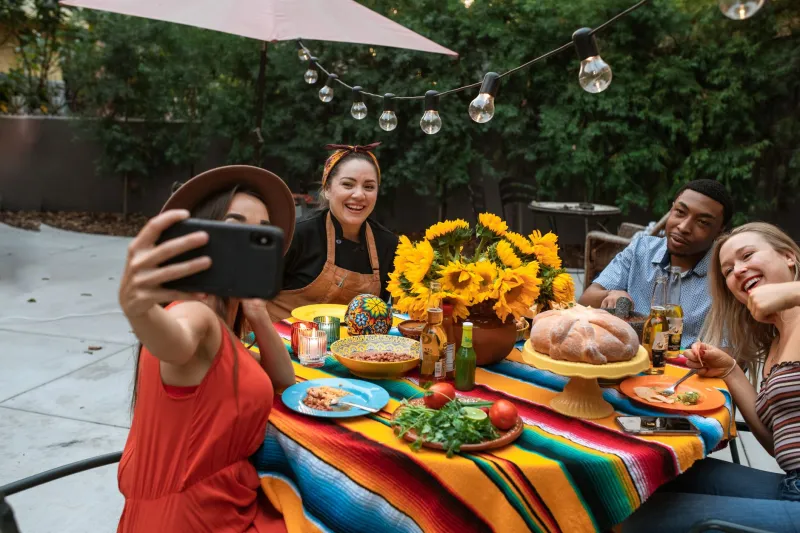
The invitation said 6 PM. The food hit the table at 8. And somewhere between the first round of chè and the second pitcher of iced tea, the room quietly split into two conversations — one for the people who were truly in, and one for everyone else.
If you've spent any time in Vietnamese American social spaces, you already know what this looks like. The backyard cookout where certain folks get pulled into the kitchen while others stay on the patio. The Lunar New Year gathering where the real gossip only surfaces after the peripheral guests have said their goodbyes. The group chat that exists just underneath the main group chat.
It's not malicious. It's not even always intentional. But the inner circle is real, the criteria for entry are elaborate, and almost nobody talks about them out loud.
The Audition Nobody Tells You About
My friend Linh, who grew up in Garden Grove and now lives in Houston, puts it plainly: "There's a version of the party you get invited to, and then there's the actual party. You don't know which one you're at until it's already over."
She's describing something that Vietnamese diaspora members across the country recognize immediately — a social sorting that happens in real time, based on signals so subtle they're almost invisible to outsiders. Language is usually the first filter. Not just whether you speak Vietnamese, but how you speak it. Regional accents carry weight. Nam versus Bắc inflections get clocked within the first few sentences. Someone who code-switches naturally, who drops into the right register without thinking, earns a kind of shorthand trust that a fluent-but-stiff speaker doesn't.
"My Vietnamese is pretty good," says Minh, a second-gen guy from the Bay Area who asked to use only his first name. "But I learned it from textbooks and apps, and people can tell. There's a warmth you get when you sound like someone's nephew, and I just... don't sound like that."
But language is only the first gate. There are others.
The Credentialing System
Generational status matters enormously, though not always in the direction you'd expect. First-generation immigrants don't automatically sit at the top of the hierarchy — in fact, the most coveted inner circles often belong to people who have figured out how to hold both worlds simultaneously. You need enough Americanness to be relatable, and enough cultural fluency to be trusted.
That sweet spot is narrow, and a lot of people spend years trying to find it.
There's also the question of origin story. Where did your family come from? When did they leave? Refugee narratives from the late '70s carry a particular gravity in some circles — a kind of founding-member status in the Vietnamese American story. Later arrivals, economic migrants, or families who came through different channels sometimes find themselves on the outside of that particular warmth, even when they're Vietnamese in every other sense.
"It's like there are levels of legitimacy," says Tram, a community organizer in San Jose. "And nobody voted on those levels. They just exist. And you either have the receipts or you don't."
The Cultural Authenticity Trap
Here's where it gets genuinely complicated. The unspoken gatekeeping in Vietnamese American spaces isn't always performed by first-gen elders policing the next generation. Plenty of it happens between second and third-gen members — and sometimes, it's the people who feel most insecure about their own Vietnameseness who enforce the rules most strictly.
Authenticity claims become a kind of currency. Who makes phở from scratch. Who still calls their parents every Sunday in Vietnamese. Who knows the right way to set up the altar. These markers get used — sometimes consciously, often not — to establish rank in a community that has spent decades being told its culture is either irrelevant or a novelty.
"When you grow up feeling like you have to defend being Vietnamese to Americans, and then defend being American to Vietnamese people, you start looking for somewhere you actually belong," says Linh. "And sometimes that means you get a little... territorial about who belongs with you."
The irony is that this gatekeeping can replicate the exact exclusion that Vietnamese Americans have experienced from mainstream American society. The club becomes cliquey in the same ways that made finding a club feel so necessary in the first place.
Who Gets Left at the Door
The people who most often find themselves on the wrong side of the velvet rope? Mixed-race Vietnamese Americans. Adoptees. People who grew up in predominantly white areas with little access to Vietnamese community. LGBTQ+ members who were pushed out of more traditional spaces. Vietnamese Americans who married outside the community. Refugees who resettled in smaller cities, far from any Vietnamese enclave, and came to gatherings in their thirties without the shared childhood references that bind everyone else together.
"I came to the US when I was twenty-two, not as a kid," says Khoa, who lives in Atlanta. "So I'm not 1.5 gen. I'm not second gen. I have a full Vietnamese upbringing but I don't have the American childhood. Nobody knows what to do with me."
This in-between status — too Vietnamese for one group, not Vietnamese enough for another — is something a surprising number of diaspora members navigate quietly, smiling through gatherings where they feel more like observers than participants.
The Cost of the Criteria
What's lost when the inner circle stays too tight? Plenty.
Community knowledge doesn't circulate. Resources get hoarded. People who could contribute — who have real love for the culture, real stake in the community's future — get written off before they've had a chance to show it. And the circle, already small in a country where Vietnamese Americans make up less than two percent of the population, gets smaller.
There's also a personal cost. The anxiety of audition-mode socializing is exhausting. Showing up to a Vietnamese American event and spending half your energy managing how you're being perceived — your accent, your references, your family's timeline — is not the same as actually being in community.
"I've started just being honest," says Tram. "Like, yes, I grew up in Iowa. Yes, my Vietnamese is shaky. Yes, I want to be here anyway. And most of the time, people actually respond to that. It's the trying to fake it that people can smell."
An Unlocked Door
None of this is unique to Vietnamese Americans. Every diasporic community has its gatekeeping rituals, its legitimacy hierarchies, its unwritten membership rules. What makes the Vietnamese American version worth examining is how much of it runs on silence — on assumptions that never get named, criteria that never get debated, and exclusions that nobody ever has to defend because nobody ever admits they're happening.
The Sài Gòn Social Club — the real one, the one that exists in living rooms and text threads and parking lots after church — is at its best when it's actually social. When the velvet rope comes down. When the person who learned Vietnamese from an app gets to sit in the kitchen too.
The potluck is better with more people around the table. Someone always brings a dish you've never tried before.