Sorry, I Can't: The Hidden Price Vietnamese Americans Pay Every Time They Put Themselves First
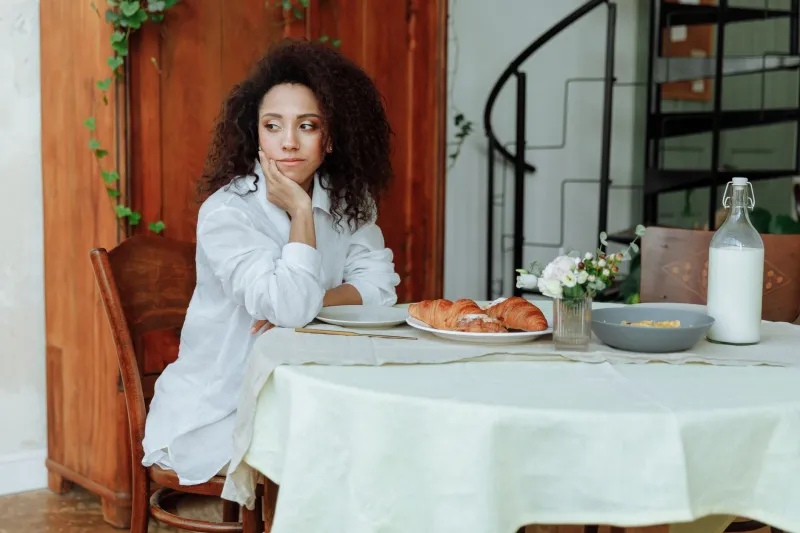
There's a moment a lot of Vietnamese Americans know intimately. Your mom calls. She needs something — money, your weekend, your presence at a cousin's baby shower you've never RSVP'd to. You open your mouth to say no. And then something happens in your chest. A tightening. A small but insistent voice that says: Who do you think you are?
You say yes. Again.
This isn't weakness. It isn't a failure of character. For so many in the Vietnamese diaspora, it's the result of a deeply wired system — one built over generations, reinforced across oceans, and encoded into the very way we understand love, duty, and what it means to be a good person.
Therapists have a clinical term for it: enmeshment. The community just calls it being Vietnamese.
When 'No' Feels Like a Four-Letter Word
Dr. Linh Nguyen, a licensed therapist based in Orange County who works predominantly with Vietnamese American clients, says she hears some version of the same story almost every week. "My clients will come in and tell me they've been practicing saying no — rehearsing it, even. And then the moment arrives and they cave. Not because they're weak, but because the emotional stakes feel genuinely catastrophic."
The catastrophe isn't just about disappointing one person. It's about what that disappointment represents. In many Vietnamese families, especially those shaped by the refugee experience, survival was literally collective. You made it because people sacrificed for you. You stayed afloat because the community held you up. Saying no — even to something small — can trigger an almost ancestral alarm: You're breaking the chain. You're the weak link. You're the one who forgot.
For Melissa Trần, a 31-year-old nurse in Houston, the guilt economy runs on a currency she's been spending her whole life. "My parents came over with nothing. Like, literally nothing. So when they ask me for things now, how do I say no? I feel like every no is me saying their sacrifice wasn't worth it. Which is insane. I know it's insane. But that's what it feels like."
The Ledger Nobody Talks About
There's an unspoken accounting system operating in a lot of Vietnamese households. It doesn't show up on paper, but everyone knows the numbers. What your parents gave up. What your grandparents endured. What the community did for your family when they first arrived — who found the apartment, who drove to the DMV, who co-signed the lease.
All of that goes into the ledger. And every time you consider saying no, you feel the balance.
This isn't unique to Vietnamese culture, but the refugee experience adds a particular gravity to it. When your family's survival story involves harrowing boat rides, re-education camps, or years spent in limbo at processing centers, the emotional debt can feel almost literal. How do you weigh your need for a quiet weekend against what your bố went through to give you any weekend at all?
"The problem," says Dr. Nguyen, "is that debt-based love doesn't actually have a repayment plan. There's no moment when you've paid enough. So people spend their entire lives giving and giving and never feeling like it's sufficient."
The Community Gaze
It's not just family. The Vietnamese American community — tight-knit, often small, frequently overlapping — has its own surveillance system. Word travels. Impressions stick. Being seen as someone who doesn't show up, who doesn't help, who prioritizes themselves over the collective? That reputation follows you.
"I skipped a community fundraiser once because I was burned out and needed a mental health day," says Kevin Phạm, 28, a graphic designer in San Jose. "My aunt found out. Within 48 hours, three different relatives had texted me. Not to check on me — to let me know that people had noticed I wasn't there. It was a fundraiser. I gave money online. But I wasn't there."
The physical presence matters. The seen-ness matters. And opting out of that visibility, even occasionally, can feel like opting out of the community itself.
Boundaries as a Second Language
Here's the thing nobody tells you about learning to set boundaries as a Vietnamese American: it's essentially learning a second language as an adult. The grammar is unfamiliar. The pronunciation feels wrong in your mouth. And you're going to make mistakes that embarrass you before you get fluent.
Many therapists who work with the Vietnamese diaspora say the framing of "boundaries" itself can be a barrier. The word, imported wholesale from Western therapy culture, often lands as cold or selfish to people raised in a collectivist framework. "I try to reframe it," says Dr. Nguyen. "Instead of 'setting a boundary,' we talk about 'protecting your capacity to keep showing up.' Because most of my clients don't want to abandon their families. They want to be able to sustain the relationship long-term without destroying themselves."
That reframe matters. It shifts the story from I'm choosing myself over you to I'm making sure I can still be here for you next year, and the year after that.
What Freedom Actually Costs
For those who've done the work — who've started saying no, slowly, imperfectly, with enormous guilt — the freedom is real. But so is the cost.
Melissa says her relationship with her parents got harder before it got better. "There were months where my mom barely talked to me. She took it personally. And honestly? That was brutal. I second-guessed myself constantly. But eventually she came around, and now our relationship is more honest. Less transactional. I think she respects me more, even if she'd never say that."
Kevin is still in the thick of it. "I'm not going to pretend I've figured it out. I still say yes to stuff I don't want to do. But I'm more conscious of it now. I notice when I'm saying yes out of fear versus yes out of genuine love. That distinction matters to me."
The distinction matters because it changes the texture of the yes. A yes rooted in fear is depleting. A yes rooted in genuine care — even when it's inconvenient, even when it costs something — fills you back up in ways you didn't expect.
Learning to Say No in Vietnamese
Maybe the real work isn't just about saying no. It's about expanding what love is allowed to look like in Vietnamese American families — making room for love that includes limits, care that includes candor, and belonging that doesn't require self-erasure.
That's slow work. Generational work, even. But it starts with someone in the family deciding that the ledger doesn't have to be infinite. That you can honor your parents' sacrifice without sacrificing yourself. That showing up fully — occasionally, sustainably, honestly — is worth more than showing up empty every single time.
Somewhere between the guilt and the freedom, there's a version of this community that holds both. We're still building it. But we're getting there.
Have a story about navigating family expectations as a Vietnamese American? Drop it in the comments or find us in the community forum. You're not alone in this.