Full Plate, Heavy Heart: Unpacking the Way Vietnamese American Parents Feed Us Their Feelings
There's a bowl of soup on the stove. It's been simmering since six in the morning. Your mom made it because you mentioned — once, maybe two months ago — that you felt a little tired. She doesn't say I love you. She says ăn đi, ăn thêm đi, and she watches you eat like your chewing is proof that everything is going to be okay.
This is the Vietnamese American dinner table. It's warm, it's generous, and sometimes — if you look closely — it's absolutely loaded with everything that couldn't be said out loud.
When the Rice Bowl Becomes a Love Language Nobody Taught You to Read
Food-as-love isn't unique to Vietnamese culture. Plenty of immigrant communities use meals to bridge what language can't reach. But there's something specific happening in Vietnamese American households that goes a little deeper than hospitality. For a generation of parents who survived displacement, scarcity, and the kind of instability that rewires how you measure safety, feeding their children became the most tangible proof they could offer that life was, finally, okay.
You weren't just being fed dinner. You were being reassured. You were the evidence that the sacrifice was worth it.
The problem is that reassurance, when it gets portioned out alongside cơm and thịt kho, doesn't always feel like love by the time it lands. Sometimes it feels like pressure. Sometimes it feels like a performance. And sometimes — especially for second-generation kids navigating American ideas about bodies, health, and autonomy — it feels like something they were never given the tools to push back on.
The Guilt That Comes Standard With Every Serving
Ask any Vietnamese American in their twenties or thirties about their relationship with food growing up, and you'll hear variations on the same story. The plate piled higher than you asked for. The comment when you stopped eating. The gentle — or not so gentle — implication that leaving food behind was ingratitude, that a thin body was a failure of parenting, that fullness was the whole point.
"My mom would cook enough for eight people for a family of four," says Linh, 29, who grew up in San Jose. "And if you didn't finish everything, she'd get quiet in that specific way. Not angry. Just… hurt. Like your appetite was a vote on how much you appreciated her."
This dynamic has a name in therapy circles — enmeshment, or emotional parentification through care-giving — but in Vietnamese American families, it rarely gets called anything at all. It just gets called love. And because it looks like love, because it smells like phở and feels like warmth, it's extraordinarily hard to untangle.
The emotional math goes something like this: she sacrificed everything to give you this life, and this bowl of soup is the smallest, most direct expression of that sacrifice. To refuse it — or even to eat it without visible gratitude — is to reject the whole architecture of everything she built for you.
That's a lot to carry between the chopsticks.
What It Does to a Body — and a Mind
Dietitians and therapists who work with Vietnamese American clients are increasingly naming what many in the community have quietly lived with for years. The relationship between food, guilt, and body image in immigrant households can leave lasting marks — not because the food itself is harmful, but because of the emotional conditions wrapped around it.
For some, it shows up as an inability to eat without guilt, or a reflexive need to finish everything on the plate regardless of hunger. For others, it's the opposite: a complicated rejection of Vietnamese food altogether, because eating it feels like re-entering an emotional contract they never signed. And for a significant number of second-gen Viet Americans — particularly women — it surfaces as disordered eating that doesn't fit neatly into the Western clinical frameworks designed around different cultural contexts.
"The tricky thing," says one therapist based in Orange County who works primarily with Asian American clients, "is that food in these families is genuinely an act of love. The intention is real. But intention and impact aren't the same thing, and a lot of my clients have spent years trying to reconcile those two truths at the same time."
The Generation That's Trying to Do It Differently
Here's where the story gets more interesting, and maybe a little more hopeful. Younger Vietnamese Americans — the ones now raising kids of their own, or watching their nieces and nephews grow up — are actively trying to rewrite some of these scripts. Not by rejecting Vietnamese food culture, which remains one of the most joyful, vibrant, and genuinely connective parts of the diaspora experience. But by separating the food from the freight.
For Minh, 34, a father of two in Houston, that's meant being intentional about how he talks about meals with his kids. "I grew up hearing 'eat more' as a reflex. My parents didn't know another way. But I'm trying to teach my kids to listen to their bodies, to enjoy food without it being a test of something. That's hard when my own mom is in the kitchen telling them to eat more."
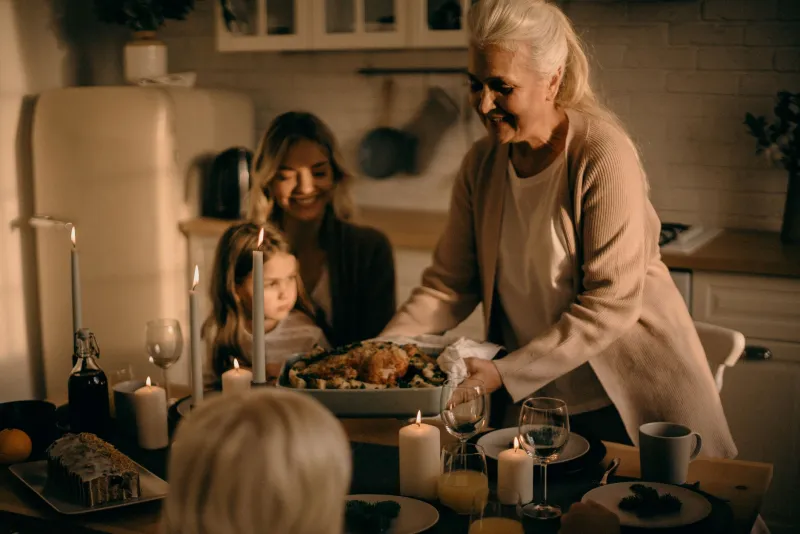
The negotiation between generations is real and ongoing. It's happening at Thanksgiving tables where grandparents are loading plates and grandchildren are quietly learning to say con no rồi — I'm full — without it becoming a family incident. It's happening in therapy offices, in group chats, in the comment sections of Vietnamese American food creators who are starting to talk openly about the emotional weight their culture places on eating.
It's also happening in kitchens, where a new cohort of Viet American cooks — home and professional alike — are reclaiming their food heritage on their own emotional terms. Cooking bún bò Huế because it's delicious and grounding, not because it's proof of devotion. Sharing meals because community is real, not because the table is a ledger.
Receiving Care Without the Strings
Maybe the most radical thing younger Vietnamese Americans are doing is learning — slowly, imperfectly — to receive love in the form it was intended, without absorbing all the anxiety that came along for the ride.
That means being able to sit down to a meal your mother made and feel genuine gratitude without guilt. It means understanding that her need to overfeed you is about her history, not your worth. It means, sometimes, eating the extra bowl anyway — not because you have to, but because you choose to, because you see her in it, and you're okay with that.
The full plate isn't going anywhere. Vietnamese mothers are not going to stop cooking at six in the morning for people who mentioned feeling tired one time. And honestly? Most of us wouldn't want them to.
But learning to sit with the love without swallowing the guilt whole — that might be the most Vietnamese American thing we can do right now. Taking what was given in abundance, and figuring out, one generation at a time, how to make it lighter.