Packed Bags, Borrowed Faces: The Emotional Baggage Vietnamese Americans Carry Home
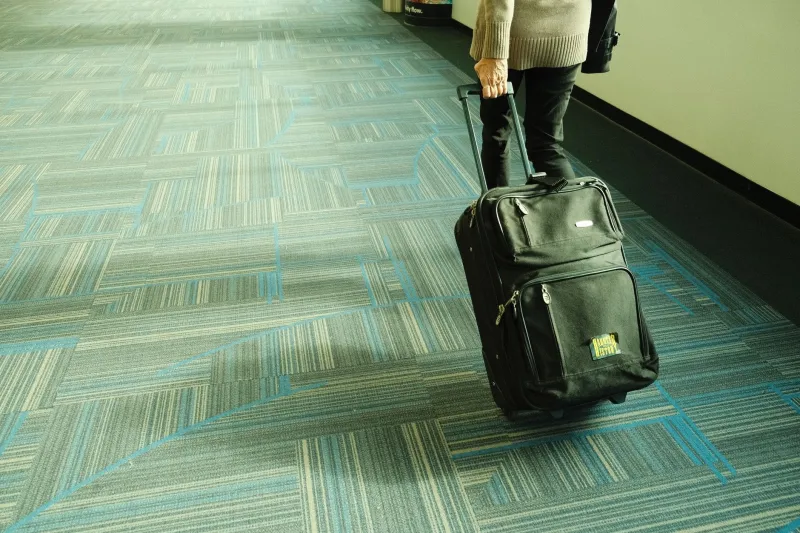
Somewhere between packing the third suitcase full of Costco vitamins and figuring out which relatives get the Levi's versus which ones get the Kirkland protein powder, it hits you. You're not just going on a trip. You're preparing for a performance.
For Vietnamese Americans, a visit back to Vietnam is one of the most emotionally loaded experiences in the diaspora playbook. It's joyful. It's exhausting. It's tender and awkward and occasionally absurd. And underneath all of it runs a current that nobody really talks about out loud: the pressure to prove that leaving was worth it.
The Show Before the Show
Let's be real — the preparation starts weeks before the flight. You rehearse answers to questions you already know are coming. Làm gì ở Mỹ? Lương bao nhiêu? Có nhà chưa? Lấy chồng chưa? What do you do? How much do you make? Do you own a house yet? Are you married yet?
These aren't just small talk. In a lot of Vietnamese family dynamics, they're the scorecard. And if your actual life doesn't quite match the highlight reel your parents have been broadcasting to relatives for years, you've got some creative storytelling ahead of you.
One Vietnamese American woman from San Jose described it like this: "My mom had been telling everyone I was 'in finance.' I'm a barista who invests in index funds. Technically not a lie, but I spent the whole trip hoping nobody asked follow-up questions."
This kind of pre-trip calibration — figuring out which version of your American life to present — is practically a rite of passage for the diaspora. You're not lying, exactly. You're curating. Editing. Showing up as the best possible trailer for a film still in production.
The Weight of the Gifts
And then there are the gifts. Oh, the gifts.
The suitcases aren't just luggage — they're physical manifestations of your success. Skincare from Sephora. Supplements from Whole Foods. Sneakers in specific sizes for cousins you've only met twice. The more you bring, the more it signals: I made it. I'm doing well. America was the right call.
But here's the thing nobody warns you about. When you arrive and hand over those gifts, the gratitude is real, the love is real — and so is the quiet, strange grief that follows. Because you realize that no amount of Costco goods can close the gap of years and distance. You're handing over products when what everyone actually wants is more time.
There's a particular kind of loneliness in being welcomed home like a celebrity guest instead of just... family.
Belonging on a Tourist Visa
For many second-generation or 1.5-generation Vietnamese Americans, returning to Vietnam surfaces a disorienting question: Am I from here, or am I just visiting?
The streets feel familiar in a bone-deep way — the smells, the sounds, the particular chaos of a Saigon morning. But then your Vietnamese stumbles over a phrase and someone switches to English to help you out, and suddenly you're a foreigner in the place you've called home in your heart for decades.
It's a specific kind of identity whiplash. In America, you're Vietnamese. In Vietnam, you're the American cousin. You exist in the hyphen between both worlds, and sometimes that hyphen feels like a very long, very turbulent flight.
A Vietnamese American graphic designer who grew up in Houston described her last trip as "feeling like I was playing a character of myself. Like I knew all my lines, I knew all the right dishes to be excited about, but there was this glass wall between me and actually being there."
That glass wall has a name. It's the accumulated weight of assimilation — years of code-switching, of building an American self — that doesn't just dissolve when you land at Tân Sơn Nhất.
The Guilt That Travels Free
Here's what doesn't get checked at baggage claim: the guilt.
Guilt for not visiting more often. Guilt for not sending more money. Guilt for building a life so far away that your grandmother's face on a phone screen has become more familiar than her hands. Guilt for succeeding in ways that required leaving, and guilt for not succeeding enough to justify what the leaving cost everyone.
For many Vietnamese Americans, the visit itself becomes a way of paying down that debt — being physically present, being generous, being on the entire time — because the alternative is sitting still long enough to feel how much you've missed.
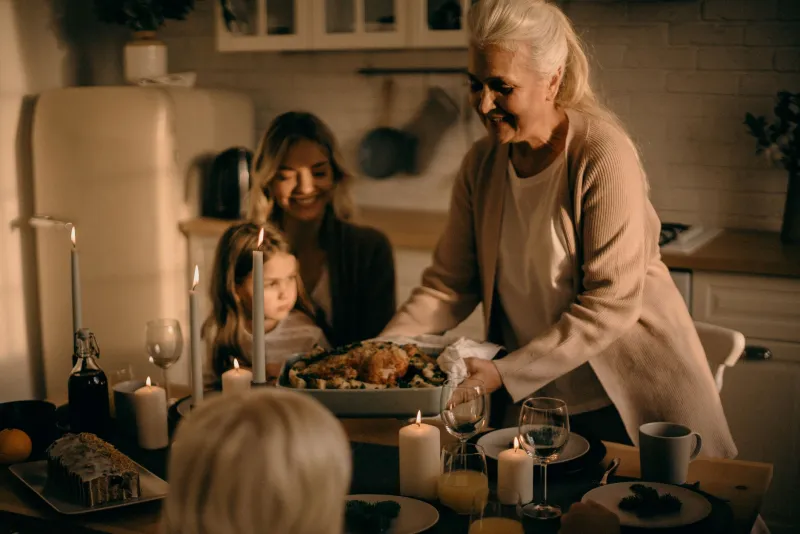
And when you're sitting at a family dinner, surrounded by relatives asking about your salary and your relationship status and whether you eat enough, the love underneath all those questions is genuinely real. It's just expressed in a language that sometimes sounds more like a performance review than a reunion.
Finding the Real Trip Inside the Trip
The Vietnamese Americans who seem to navigate these visits with the most grace are the ones who've made a conscious decision to stop performing — or at least, to perform a little less.
That might look like being honest with relatives about what your life actually looks like. It might mean spending a morning just sitting with an elderly aunt without an agenda. It might mean allowing yourself to not know the answer to where do you belong and being okay with the ambiguity.
One man from Orange County who visits Đà Nẵng every other year put it simply: "I stopped trying to be the success story they wanted and started just being the nephew who showed up. That changed everything."
The trip doesn't have to be a proof of concept. It can just be a visit.
You Can Come Home Without Arriving as a Trophy
There's no clean resolution to the emotional complexity of the diaspora homecoming. The expectations don't disappear. The guilt doesn't fully lift. The identity questions don't get answered over a bowl of bún bò Huế, no matter how good it is.
But there's something quietly radical about deciding that your worth isn't measured by the weight of your suitcases or the impressiveness of your job title when translated into Vietnamese for a great-aunt you see once every few years.
You left. You built something. You came back. That's the story — messy, incomplete, and entirely yours.
The Sài Gòn Social Club has always believed that the diaspora experience isn't about having it figured out. It's about showing up anyway, with your overpacked bags and your complicated feelings and your Costco vitamins, and letting that be enough.