No Invite Needed: Vietnamese Americans Are Building the Rooms They Were Never Let Into
There's a particular kind of loneliness that doesn't have a clean name. It's not the loneliness of being alone—it's the loneliness of being in the wrong room. You're at the Vietnamese church potluck and you feel too American. You're at the office happy hour and you feel too Vietnamese. You're nodding and smiling and code-switching so fast your jaw hurts, and somewhere in the middle of it all you think: I should not have to work this hard just to belong somewhere.
A lot of Vietnamese Americans know this feeling intimately. And a growing number of them have stopped waiting for someone to fix it.
The Old Guard and Its Unwritten Rules
Traditional Vietnamese American community organizations—the mutual aid societies, the temple associations, the hometown clubs—were built for survival. They served a real and urgent purpose for refugees arriving with nothing, offering networks, resources, and a cultural anchor in an unfamiliar country. That legacy deserves genuine respect.
But survival infrastructure isn't always the same as belonging infrastructure. Many second-generation Vietnamese Americans describe these spaces with a complicated mix of gratitude and estrangement. The hierarchies can feel rigid. The gatekeeping—based on dialect, hometown, religion, or simply how long your family has been in the community—can be subtle but sharp. If your parents came over in 1995 instead of 1979, you might feel it. If you grew up in the suburbs instead of Little Saigon, you might feel it. If you're queer, or married outside the community, or don't speak Vietnamese fluently enough—you will almost certainly feel it.
"I went to a few events at one of the big associations in our city," says Linh, a 31-year-old graphic designer in Houston. "Everyone was friendly on the surface, but there was this invisible scorecard I didn't understand. I never quite cracked the code."
A New Kind of Club Card
So people started making their own rooms.
Some of them are digital. Private Facebook groups with a few hundred members, moderated by someone's cousin who takes the vibe seriously. Discord servers where Vietnamese American professionals share job leads, apartment tips, and memes about their moms. Subreddits that started as jokes and turned into genuine advice forums.
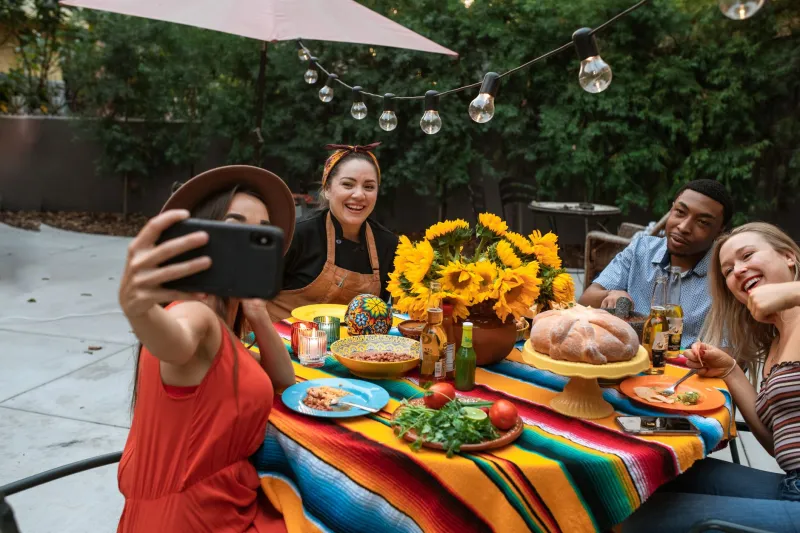
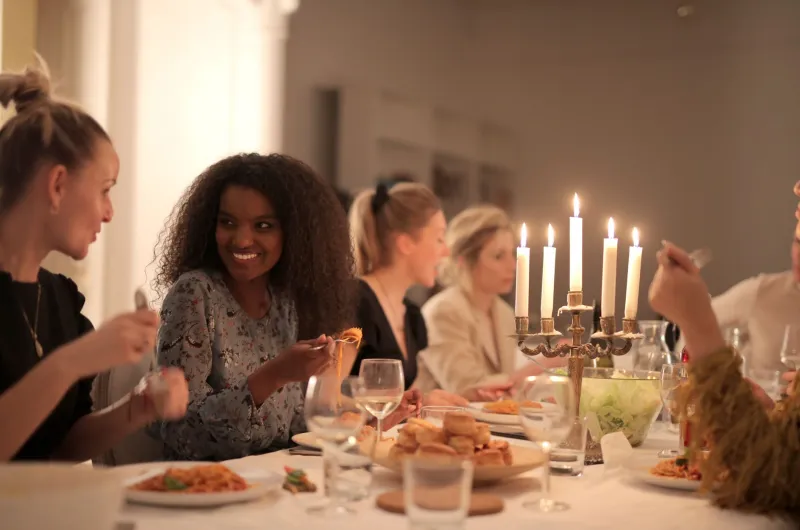
Others are analog and intentional. Monthly dinners limited to twelve people, rotating hosts, potluck-style but with a theme. Book clubs reading Viet Thanh Nguyen and Ocean Vuong and then arguing about them for two hours over boba. Hiking groups in LA and Houston and the Bay that are technically about the outdoors but really about finding your people on a Tuesday morning when everyone else is at work.
What makes these spaces different from what came before isn't just the format—it's the philosophy. The explicit goal is low hierarchy, high honesty. You don't have to prove your Vietnamese-ness to get in. You don't have to perform assimilation to feel comfortable either.
"We literally have one rule," says Marcus, who co-founded a monthly mixer for Vietnamese American creatives in Atlanta. "Don't be weird about people's backgrounds. We've got people who were born in Hanoi and people who've never set foot in Vietnam. We've got people who only speak English and people who switch mid-sentence. Nobody's more legit than anyone else."
The Insider-Outsider Paradox
What's striking about these new communities is how openly they grapple with the question of identity rather than trying to resolve it. In older organizations, the implicit pressure was often toward consensus—toward a singular Vietnamese American narrative. These newer spaces seem almost allergic to that.
Members talk freely about feeling fake at family gatherings when they can't keep up with the Vietnamese. They talk about the weird guilt of succeeding in ways their parents couldn't imagine, and the loneliness that comes with that success. They talk about being fetishized by non-Vietnamese partners or tokenized by non-Vietnamese workplaces, and needing a room where they don't have to explain why that's exhausting.
This isn't therapy, exactly. But it's not not therapy, either.
"There's something that happens when you're in a room full of people who get the specific flavor of your specific weirdness," says Tiffany, a nurse practitioner who helped organize a women's group in San Jose. "You don't have to translate yourself. You just get to be."
Exclusivity Without Gatekeeping
Here's the tension, though: some of these new spaces are themselves selective. Capped guest lists. Application-style intake processes. Referral-only membership. Is this just recreating the very gatekeeping that drove people away from traditional communities?
Organizers push back on that framing. There's a difference, they argue, between exclusivity that maintains power structures and exclusivity that creates psychological safety. Keeping a dinner to twelve people isn't the same as keeping it to people from the right province. Requiring a referral isn't the same as requiring a certain kind of family history.
Maybe. The line can get blurry. And as some of these groups grow, the founders are already grappling with questions about scale, drift, and how to keep the original spirit alive when the room gets bigger.
But for now, for a lot of people, these spaces are filling something real. They're not replacing family, or heritage, or the older organizations that still do important work. They're just adding a room that didn't exist before—one where the door opens a little differently, and the cost of entry is just showing up as yourself.
That turns out to be rarer than it should be. And apparently, people will drive across town for it.