Mic Night Therapy: What Your Uncle's Song Choice Says About Your Entire Family
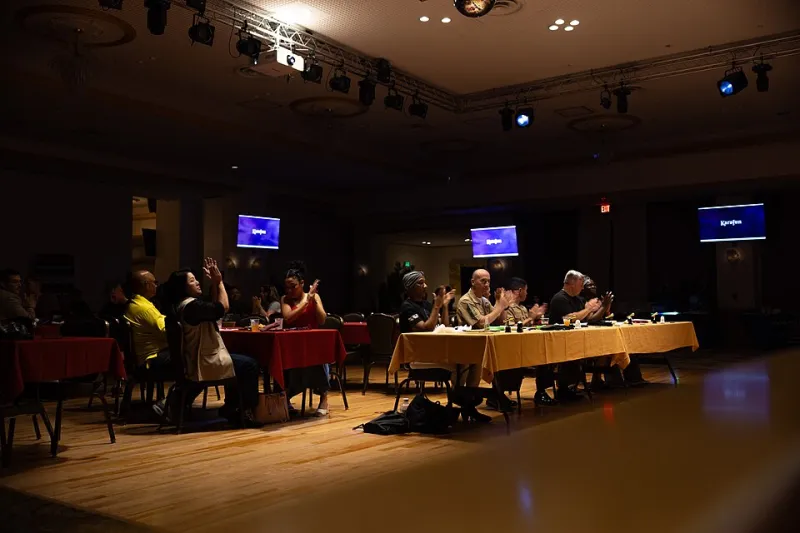
Photo: U.S. Marine Corps photo by Cpl. Thomas Sheng, Public domain, via Wikimedia Commons
There's a moment at every Vietnamese-American family gathering — usually around the third hour, somewhere between the gỏi cuốn and the second round of Heineken — when someone drags out the karaoke machine. Or, if the family is doing well for itself, books a private room at a lounge in Little Saigon, Eden Center, or wherever the nearest cluster of Vietnamese restaurants happens to be.
And just like that, the night shifts. The kids scatter. The aunties refill their glasses. And somebody's dad picks up the microphone like he's been waiting his entire adult life for this moment.
Welcome to the unofficial therapy session of the Vietnamese diaspora. Nobody scheduled it. Nobody agreed to it. And yet, here we all are.
The Bolero Generation: Feelings on Full Volume
If you've got parents or grandparents who came over before or around 1975, you already know what's coming the second they get the remote. Bolero. Every single time.
Nhạc vàng — the old gold music — is basically the emotional operating system for the first generation. Songs like "Nỗi Lòng Người Đi" or "Buồn Ơi Chào Mi" aren't just nostalgic picks. They're loaded. They carry entire chapters of loss, displacement, and a homeland that no longer exists in the form they remember it.
Here's the thing: your grandparents are not going to sit you down and explain what it felt like to leave Vietnam. They're not going to describe the camps, the uncertainty, or the specific grief of building a life in a country that didn't speak their language. But they will sing about it. Loudly. With their eyes half-closed and one hand pressed to their chest like they're testifying in church.
That bolero your bà nội just performed? That's her memoir. You just didn't know you were supposed to be taking notes.
The Middle Generation: Stuck Between Two Playlists
Then there's the in-between crowd — the parents who arrived as kids, or came in their twenties and had to rebuild from scratch. Their karaoke choices are genuinely chaotic, and honestly, that tracks.
One minute your dad is deep in a Vietnamese ballad from the 80s, doing his best to honor the culture. Next minute he's attempting "My Way" by Frank Sinatra with the confidence of a man who has absolutely never questioned a single decision in his life. The song choice isn't random. It's a whole identity statement: I assimilated. I made it. I am a man who knows who Frank Sinatra is.
The moms in this generation tend to go one of two directions. Either they're performing heartbreak anthems with a precision that makes everyone slightly uncomfortable (who hurt you, Mẹ?), or they're doing upbeat Vietnamese pop from the 2000s like they're trying to seem relatable to the younger cousins. Neither works, but we love them for trying.
What nobody in this generation is doing is talking about the actual stress of running a nail salon for twenty years, putting three kids through college, or the loneliness of living in a suburb where nobody else speaks Vietnamese. The karaoke machine is cheaper than a therapist and doesn't require insurance.
The Second-Gen Chaos Slot
At some point, the mic gets passed to the younger generation, and this is where things get interesting — or awkward, depending on your family's vibe.
Second-gen Vietnamese Americans at karaoke are a study in cultural negotiation. Some lean hard into the American pop catalog: Taylor Swift, Bruno Mars, anything with a chorus that doesn't require explanation. Others, usually the ones who grew up with stricter households or spent summers in Vietnam, will attempt a Vietnamese song and absolutely destroy it phonetically while nailing the emotional delivery.
But the most revealing moment? When a second-gen kid picks a song their parents love. Not because they were told to, but because they actually know the words. Watch what happens to the room. Aunties tearing up. Dad suddenly very interested in his beer label. Grandma clutching her heart.
That three-minute song just said "I see you" in a way that no family meeting ever could.
The Unspoken Rules of the Queue
Every Vietnamese karaoke night runs on a set of unwritten laws that nobody explains but everyone understands.
You do not skip someone's song. Even if Uncle Hùng has been doing the same Chế Linh ballad for fifteen years and he's going to do it again tonight and it's going to be seventeen minutes long. You sit there. You clap at the end. This is respect.
You also do not grab the mic from an elder mid-song. It doesn't matter if they're off-key. It doesn't matter if they've forgotten the second verse and are now humming. The mic is theirs until they decide otherwise.
And if someone gets emotional — really emotional, voice cracking, eyes going glassy — you don't make it weird. You pour them a drink. You let them finish. Because whatever they're processing right now, they've earned the right to process it through a karaoke speaker at full volume.
What's Actually Being Said
Here's the thing nobody talks about: Vietnamese families, particularly those shaped by war, migration, and survival, often don't have a strong tradition of emotional directness. Vulnerability in conversation can feel dangerous when your history has taught you that saying the wrong thing — or saying anything — can have consequences.
Karaoke is the workaround. It's a culturally sanctioned space where feelings are allowed to exist in public, protected by the plausible deniability of "I just really like this song."
Your grandfather isn't crying because he's sad. He's just really into this particular melody. Your mom isn't choosing that heartbreak song because she wants to talk about her marriage. She just has good taste in music. Nobody is processing anything. We're just singing.
Except we all know that's not entirely true.
The Karaoke Lounge as Sacred Space
Next time your family books that private room — the one with the slightly sticky leather couches and the tambourine nobody knows how to use — pay attention. Not just to the songs, but to who picks them, when they pick them, and how they look when they're singing.
You're watching your family tell their stories in the only language they've all agreed to share. The boleros and ballads, the Sinatra covers and the shaky pop attempts — it's all one long, loud, slightly off-pitch conversation about who they are, where they came from, and how much they love each other even when they have absolutely no idea how to say it.
And honestly? That's worth way more than whatever the therapy copay would've been.