After Hours, Authentic: How Vietnamese Americans Are Rewriting the Rules of Social Capital
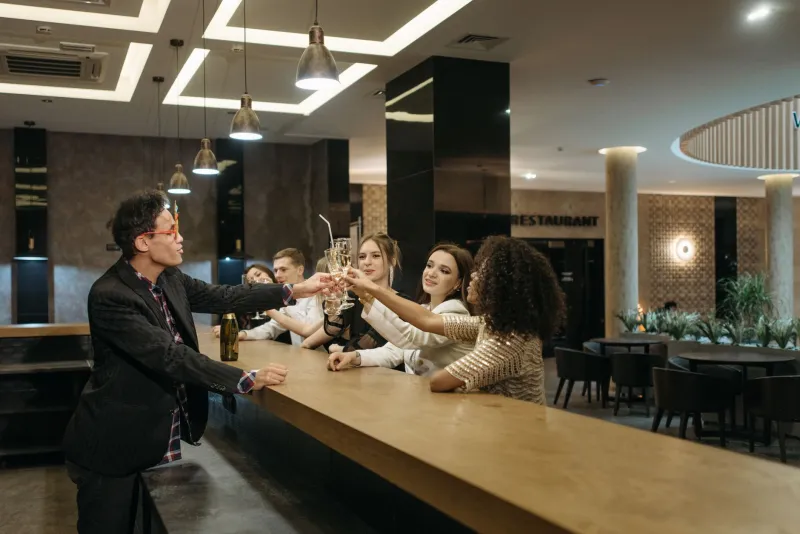
The event is called "Viet & Chill" and it's held in the back room of a Vietnamese-owned bar in Houston's Midtown on the third Thursday of every month. There's a signature cocktail—a lychee and calamansi situation that tastes like someone's aunt's garden—and a loose agenda that involves a guest speaker, a lot of introductions, and then two hours of whoever-stays-stays. It's been running for about eighteen months. The waitlist to attend has 300 names on it.
This is what social capital looks like when Vietnamese Americans build it for themselves.
The Network That Wasn't There
For most of American professional history, networking meant knowing the right people—and the right people were rarely Vietnamese. The country club, the alumni network, the golf foursome, the charity gala board: these were the rooms where deals got done, jobs got filled, and introductions got made. And they were rooms that Vietnamese Americans, by and large, were not in.
The first generation mostly didn't try to get in. They built parallel economies instead—nail salons, restaurants, donut shops, fishing boats, garment factories—and those economies were real and sustaining. But they operated somewhat separately from the broader American professional infrastructure.
The second generation grew up straddling both worlds. They got the degrees, they took the corporate jobs, they joined the professional associations. But they often found themselves navigating those spaces alone, without the cultural fluency that comes from having grown up inside them, and without the informal networks that their white colleagues had inherited almost by osmosis.
"I remember going to my first industry mixer in my mid-twenties," says Kevin, a 34-year-old marketing director in Los Angeles. "I was one of maybe three Asian people in the room. I didn't know how to work it. I didn't have the moves. I went home feeling like I'd failed at something I didn't even understand."
Building the Table Instead of Finding a Seat
What's emerged over the past decade—and accelerated sharply since 2020—is a conscious effort by Vietnamese Americans to build their own professional and social infrastructure. Not separate from American society, exactly, but not dependent on it either.
In Los Angeles, a collective called Viet Creatives has been hosting quarterly showcases that mix portfolio reviews with DJ sets and bánh mì from a local spot. In the Bay Area, a group of Vietnamese American tech workers started a Slack channel that now has over a thousand members sharing job leads, investor intros, and advice about navigating workplace dynamics as a visible minority. In New York, a Vietnamese American lawyer started hosting monthly dinners for other Viet professionals in finance and law—partly for networking, partly because she was tired of being the only one at every table.
These aren't charity projects. They're strategic. The people building them understand that social capital compounds, that the introductions you make in your thirties pay off in your forties, and that community infrastructure is as real an asset as a strong resume.
"I think about it like building a network that actually looks like me," says Stephanie, who co-organizes a monthly event series for Vietnamese American women in business in Houston. "It's not about excluding anyone. It's about making sure that when someone Vietnamese is looking for a mentor, or a co-founder, or just someone who gets why the family stuff is complicated—they can find that here."
Code-Switching Has a Cost
But building these spaces also means reckoning with some honest tensions.
One of them is the question of assimilation. Vietnamese Americans who've built successful careers in predominantly white industries often carry a complicated relationship with their own visibility. Some were rewarded, professionally, for downplaying their Vietnamese-ness—for anglicizing their names, for not talking about their family's history, for fitting seamlessly into whatever culture the workplace had established. Showing up at a Vietnamese-centered networking event can feel, for some of them, like a kind of coming out.
"I spent years making myself as neutral as possible at work," admits Danny, a financial advisor in Chicago. "When I started going to these Viet professional events, I felt weirdly exposed. Like, oh, I have a whole identity I've been keeping in a drawer."
There's also the class dimension, which nobody talks about enough. These new social scenes—cocktail-forward, aesthetically polished, often held at trendy venues—are accessible to Vietnamese Americans who've reached a certain economic level. They're not always accessible to the ones who haven't. The organizers of the most thoughtful events are aware of this, and some actively work to keep ticket prices low or offer sliding scale options. But the tension doesn't disappear.
What the Room Is Actually For
Ask the organizers what success looks like and the answers are surprisingly consistent. It's not about headcount or press coverage or how many business cards got exchanged. It's about whether people left feeling less alone in their specific situation.
That's a different metric than the traditional networking event, which is fundamentally transactional. These spaces are trying to be something more like community—which is messier, harder to scale, and harder to monetize, but also harder to replicate.
The lychee cocktail at Viet & Chill sells out every month. The waitlist keeps growing. And somewhere in that back room in Houston, two Vietnamese Americans who'd never met are realizing they grew up in the same neighborhood in Saigon, worked in the same industry, and have been looking for exactly this conversation for years.
That's the whole point. And it's working.